Sign in β€Ί

Solutions

Gastrointestinal
Well-being

The horse's gastrointestinal system is constantly subjected to stimuli that can disrupt its natural balance. Discover how Miraclay nutritional support assists the protection of the gastric mucosa and the maintenance of a more stable digestive environment.

The natural barrier of digestive well-being

Equilibrium β€” physiological support, not a medicine

Intense training, competitions, travel, dietary changes, periods of stress and management variations can disrupt the natural balance of the horse's gastrointestinal system.

Equilibrium is designed as nutritional support based on natural smectite clay to promote the protection of the gastric mucosa and help maintain a more stable digestive environment. It is not a medicine and does not replace veterinary treatments, but it is a useful management tool to support the horse during phases of greater physical and metabolic demand.

Personalised assessment

How to add Equilibrium to your horse's diet

Answer a few questions about your horse's profile: we'll prepare a tailor-made nutritional assessment for you β€” points of attention, feeding strategy and how to introduce Equilibrium. Free, right inside the chat.

How it works

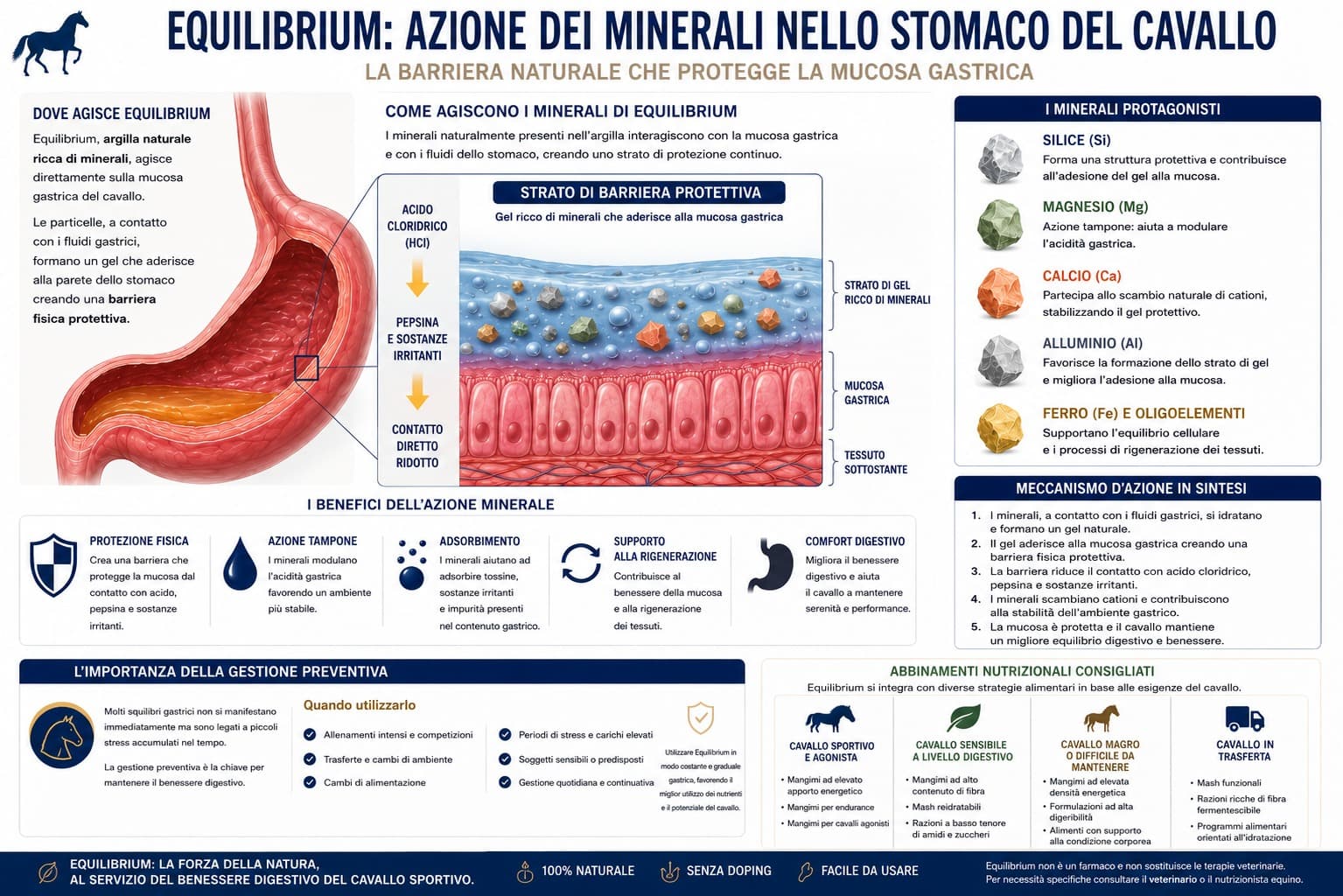
The action of minerals in the horse's stomach

The lamellar structure of smectite clay forms a thin coating that adheres to the mucins of the gastric mucosa: a physical barrier action, natural and gradual.

Infographic: the action of smectite-clay minerals in the horse's stomach β€” minerals, gastric mucosa and the stages of the natural protective barrier

Image for purely illustrative purposes. It does not constitute a diagnostic or therapeutic indication and does not replace the opinion of the veterinarian.

Natural mechanism

Natural barrier action

The particular lamellar structure of smectite clay makes it possible to form a thin viscoelastic coating that naturally adheres to the mucins present in the gastric mucosa. The action is exclusively physical and natural, without interfering with the body's physiological processes.

How to introduce Equilibrium

Equilibrium as ongoing support during moments of greater physical and metabolic demand, to accompany the horse while maintaining a more stable digestive environment.

Common situations

  • β€”Stressed gastric environment
  • β€”Contact with irritant substances
  • β€”Variations in digestive balance
  • β€”Phases of greater metabolic demand

What it helps to do

  • β€”Promote the protection of the gastric mucosa
  • β€”Limit direct contact with irritant substances
  • β€”Support the normal balance of the gastric environment
  • β€”Contribute to the horse's digestive comfort

The equine athlete

Well-being of the sport horse

The equine athlete is subject to conditions that can affect digestive well-being. In these situations Equilibrium can be a valuable management aid, helping to maintain greater calm in feeding and digestion.

How to introduce Equilibrium

Add Equilibrium to the daily management of the sport horse, adjusting its use according to the workload and the competitive season.

Common situations

  • β€”Intense training
  • β€”Races and competitions
  • β€”Frequent transport
  • β€”Changes of stable
  • β€”Dietary changes
  • β€”Periods of environmental stress

What it helps to do

  • β€”Greater feeding regularity
  • β€”Better digestive comfort
  • β€”Better adaptation to periods of stress
  • β€”Support for the barrier function of the mucosa
  • β€”Support for gastrointestinal balance

Preventive management

The importance of prevention

Many digestive problems do not appear suddenly but are the result of small imbalances that accumulate over time. The aim is not to intervene when the problem is already present, but to support the normal digestive balance during moments of greater demand.

How to introduce Equilibrium

The scheduled use of Equilibrium is particularly useful as an ongoing preventive strategy, beginning in the days that precede periods of greater demand.

Common situations

  • β€”Before competitions
  • β€”During periods of intense training
  • β€”At seasonal changes
  • β€”During travel
  • β€”At changes of ration
  • β€”In horses particularly sensitive to stress

What it helps to do

  • β€”Anticipate small imbalances before they accumulate
  • β€”Keep the digestive environment stable during critical periods
  • β€”Accompany the horse during phases of greater effort
  • β€”Support normal balance over time

Changes of environment

Travel and changes of environment

Journeys, new boxes, new companions and new routines can affect gastrointestinal well-being. Sporting activity away from home can also increase metabolic stress and alter normal feeding habits.

How to introduce Equilibrium

Add Equilibrium to the management protocol in the days before and after the move, both during intense training and at competitions.

Common situations

  • β€”Journeys and transport
  • β€”New boxes and new stables
  • β€”New companions and new routines
  • β€”The days before and after the move

What it helps to do

  • β€”Support digestive function during travel
  • β€”Limit the impact of the change of environment on the digestive system
  • β€”Maintain greater calm in feeding

Dietary transition

Dietary changes

Every change in the diet requires an adjustment by the digestive system. Smectite clay helps maintain a more stable intestinal environment during the dietary transition.

How to introduce Equilibrium

Use Equilibrium alongside every change in the diet, to support the stability of the digestive environment during the transition phase.

Common situations

  • β€”Changes of ration
  • β€”Introduction of new feeds
  • β€”Seasonal variations in the diet
  • β€”Horses sensitive to transitions

What it helps to do

  • β€”Accompany the adaptation of the digestive system
  • β€”Maintain a more stable intestinal environment
  • β€”Promote a gradual dietary transition

Body condition

Lean or hard-to-keep horses

A horse that struggles to maintain body condition first of all needs a proper veterinary and nutritional assessment. Within a complete feeding programme, Equilibrium can help create more favourable digestive conditions to make the most of the ration provided.

How to introduce Equilibrium

Add Equilibrium within a complete feeding programme, always after a proper veterinary and nutritional assessment.

Common situations

  • β€”Lean horses
  • β€”Horses that struggle to maintain condition
  • β€”High workloads
  • β€”Physical-condition recovery programmes

What it helps to do

  • β€”Create more favourable digestive conditions
  • β€”Make the most of the ration provided
  • β€”Support digestive comfort in recovery programmes

Equilibrium does not treat a condition

Equilibrium helps the horse maintain its natural digestive balance, fostering the conditions to best express well-being, performance and recovery. It is not a medicine and does not replace the diagnosis, prescription or care of a veterinarian. In the presence of marked or persistent digestive symptoms, always consult your trusted veterinarian.

Recommended pairings

Equilibrium in the ration

Equilibrium can be easily combined with different types of feeds and functional mashes, within a feeding strategy oriented towards digestive stability.

Fibre-rich mashes

Mashes based on highly digestible fibre.

Particularly suited for

  • β€”Support hydration
  • β€”Promote gut-intestine well-being
  • β€”Sport horses subjected to intense work
  • β€”Recovery after races and travel

With Equilibrium

Ideal for horses that need complete digestive support and greater attention to gastrointestinal balance.
Low-sugar and low-starch feeds

Feeds with a low content of sugars and starches.

Particularly suited for

  • β€”Horses sensitive to glycaemic spikes
  • β€”Horses with specific metabolic needs
  • β€”Controlled feeding management

With Equilibrium

Supports nutritional management oriented towards digestive and metabolic stability.

High-energy-density feeds

Feeds with a high energy density.

Particularly suited for

  • β€”Lean horses
  • β€”Horses that struggle to maintain body condition
  • β€”Horses subjected to high workloads

With Equilibrium

Can help optimise digestive comfort within feeding programmes intended for the recovery of physical condition.

Why choose it

Why choose Equilibrium

Natural action

Selected smectite clay of high purity.

Digestive support

Contributes to the protection and comfort of the gastric mucosa.

Preventive management

Designed to accompany the horse during moments of greater demand.

Easy integration

Compatible with the main feeding strategies of the sport horse.

Daily use

Suitable both as ongoing support and during the critical periods of the competitive season.

The product

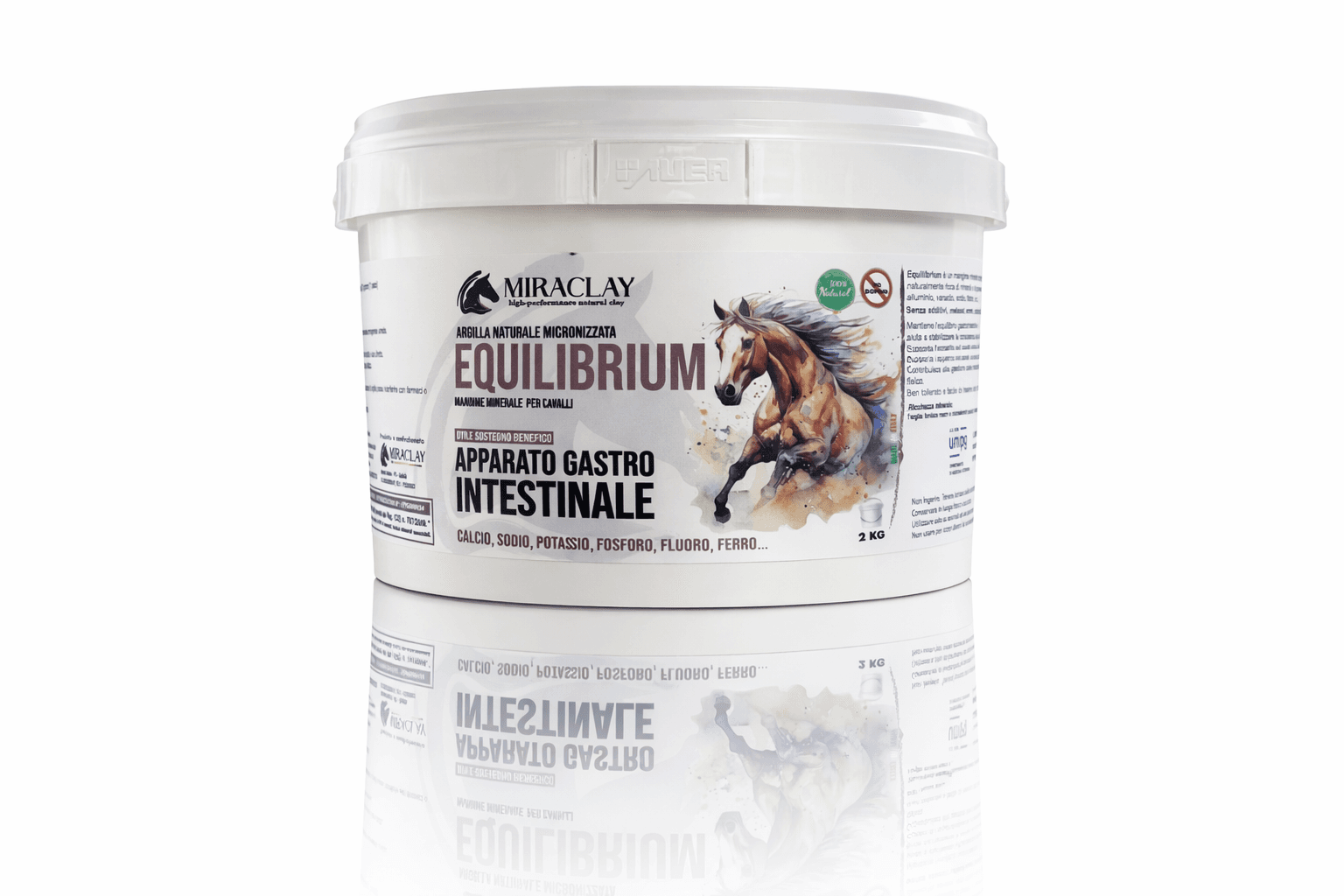
Equilibrium Miraclay

Nutritional support with natural smectite clay for the protection of the gastric mucosa and digestive balance.

Miglior ValoreEquilibrium

Equilibrium

Depura Β· Nutre Β· Rigenera

Mangime minerale complementare a base di argilla naturale micronizzata. Supporta il benessere gastrointestinale, migliora la digestione e ottimizza l'assimilazione dei nutrienti.

When to use it: Before competitions, during intense training, at seasonal changes, during travel and at changes of ration

from€88,00/ 2 kg
Buy

Not sure whether Equilibrium is right for your horse? First build its nutritional profile: it starts from your horse's needs, not from the product.

Not sure where to start?

Build a
tailor-made protocol for your horse

Answer a few questions about your horse's discipline, workload and needs: we'll show you how to add Equilibrium to daily management, when and how often. Free, ready in 3 minutes.

Create your protocol

Frequently asked questions

Everything you want to know

Disclaimer β€” The contents of this page are for purely informational purposes and do not constitute veterinary advice. Equilibrium is a complementary mineral feed based on natural smectite clay: it is not a medicine, it does not treat conditions and it in no way replaces the diagnosis, prescription or care of a veterinarian. The action described is of an exclusively physical and physiological nature. In the presence of marked or persistent digestive symptoms, of a horse that struggles to maintain body condition or of any doubt about the horse's health, always consult your trusted veterinarian.

ShopProtocols